


新着情報
「地球環境科学と私」第六十三回
2026.5.21
「地球環境科学と私」第六十三回は地質・地球生物学講座 ハンブレ・マークさんによる
Stories Written in Stone: The Science of Fossil Reefs です.
Stories Written in Stone: The Science of Fossil Reefs
地質・地球生物学講座 ハンブレ・マーク
My research has long been guided by a simple but powerful question: How have coral reefs responded to changes in climate and sea level through time? By examining the geological record—archives built by ancient corals—it becomes possible to reconstruct how reefs grew, adapted, or sometimes collapsed as the environment around them changed. This work has taken me to the Ryukyu Islands in Japan, the Great Barrier Reef in Australia, Hawai’i, and other islands across the Pacific, where the history of reefs is preserved in rocks.
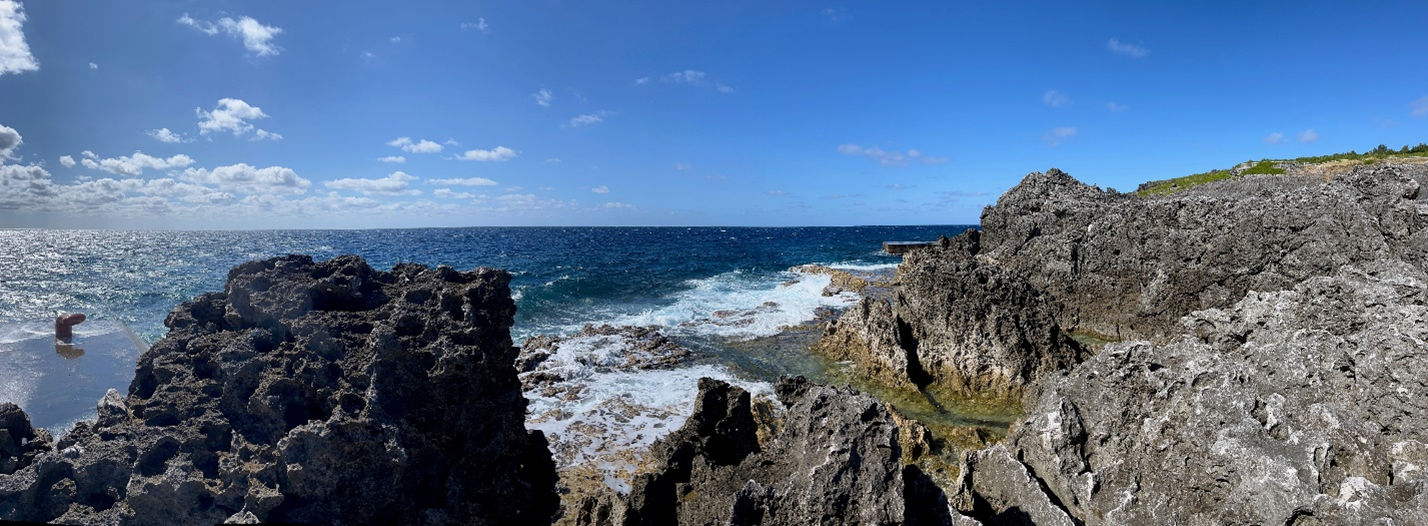
Figure 1: View of the coast of Minamidaito Jima, Okinawa Prefecture, where Pleistocene and Miocene coral reef limestones are extensively exposed, preserving clues to the complex history of the reef and its relationship with long‑term climate and sea‑level change. Photo credit: Marc Humblet
Layer by layer, coral reefs record changes in sea level, climate, ocean chemistry, and even tectonic movements. By studying ancient reef formations and the fossils and sediments preserved within them, it is possible to reconstruct environments that existed hundreds of thousands of years ago. This approach is known as reef geology and paleoecology. Paleoecology is the study of ancient ecosystems and the conditions that shaped them—a field that requires both scientific curiosity and detective‑like reasoning. Each coral fragment, shell, or grain of sediment is a clue, and piecing these clues together reveals how reefs evolved.
A central theme in my work is the relationship between reef growth and sea‑level change. When ice sheets melt, sea level rises; when they expand, sea level falls. Reefs must continually adjust to these shifts. If sea level rises too quickly, reefs may “drown” because they cannot grow fast enough to keep pace. If sea level falls, reefs may become exposed and die. By studying fossil reefs, it has been possible to identify periods when reefs thrived, struggled, or shifted their position along coastlines and continental shelves. These findings illuminate not only the past but also the challenges reefs face today as sea level rises due to global warming.
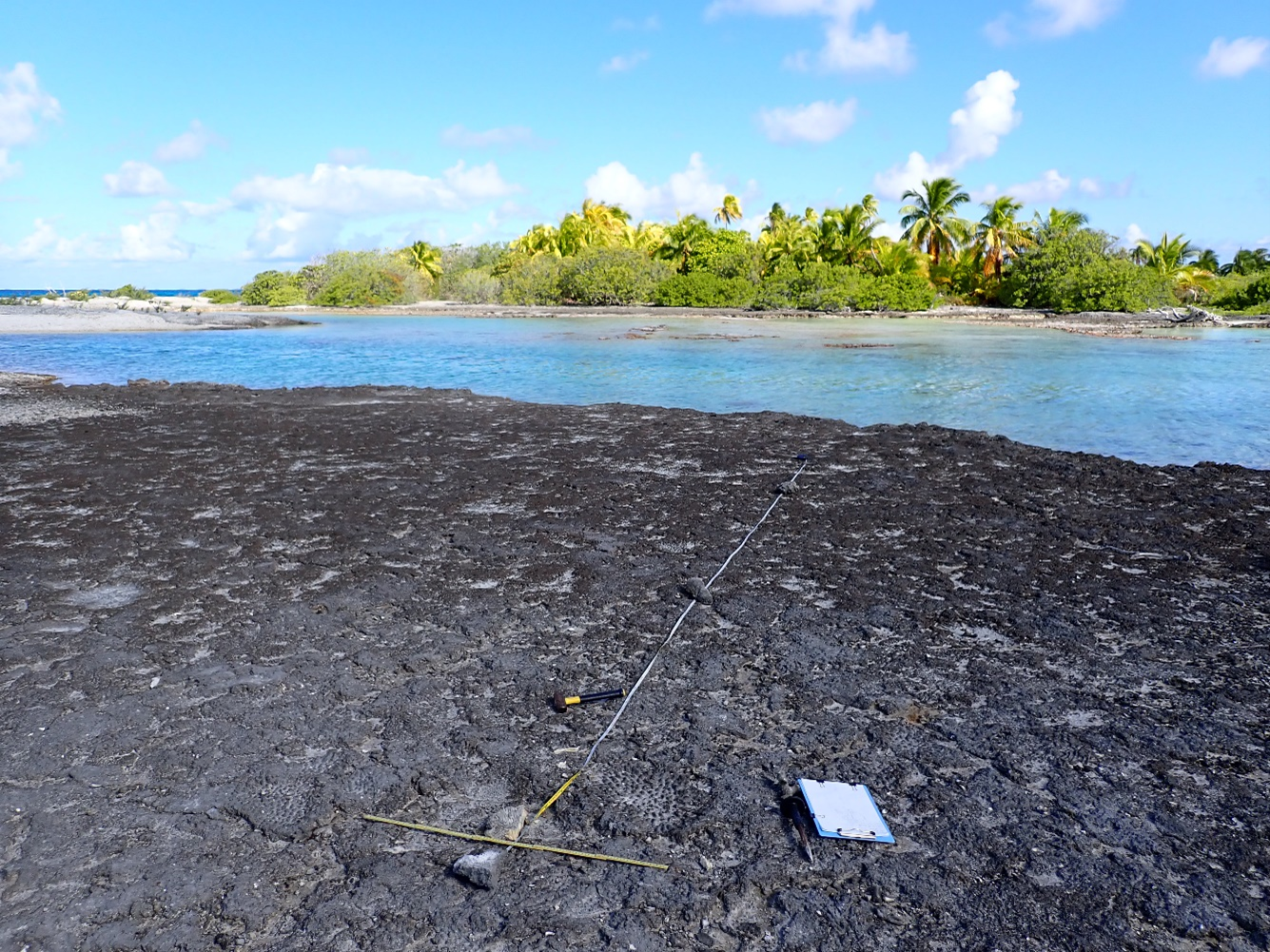
Figure 2: Fieldwork on the atoll of Tikehau in the Tuamotu Archipelago, French Polynesia. The photo shows a Holocene reef flat composed of numerous fossil corals. Photo credit: Marc Humblet
A major part of my research involves drilling into ancient reef formations to obtain long cylindrical samples known as cores. These cores preserve layer upon layer of reef growth, much like tree rings. Each layer contains fossils, sediments, and chemical signatures that reveal what the environment was like when that part of the reef was alive. Shifts in coral and coralline algal species, coral morphology, or the presence of certain microscopic fossils help reconstruct how environmental conditions changed over time and influenced reef composition. By analyzing these cores, it is possible to reconstruct reef development during the Pleistocene Epoch, when repeated ice ages caused sea level to fluctuate by more than 100 meters.
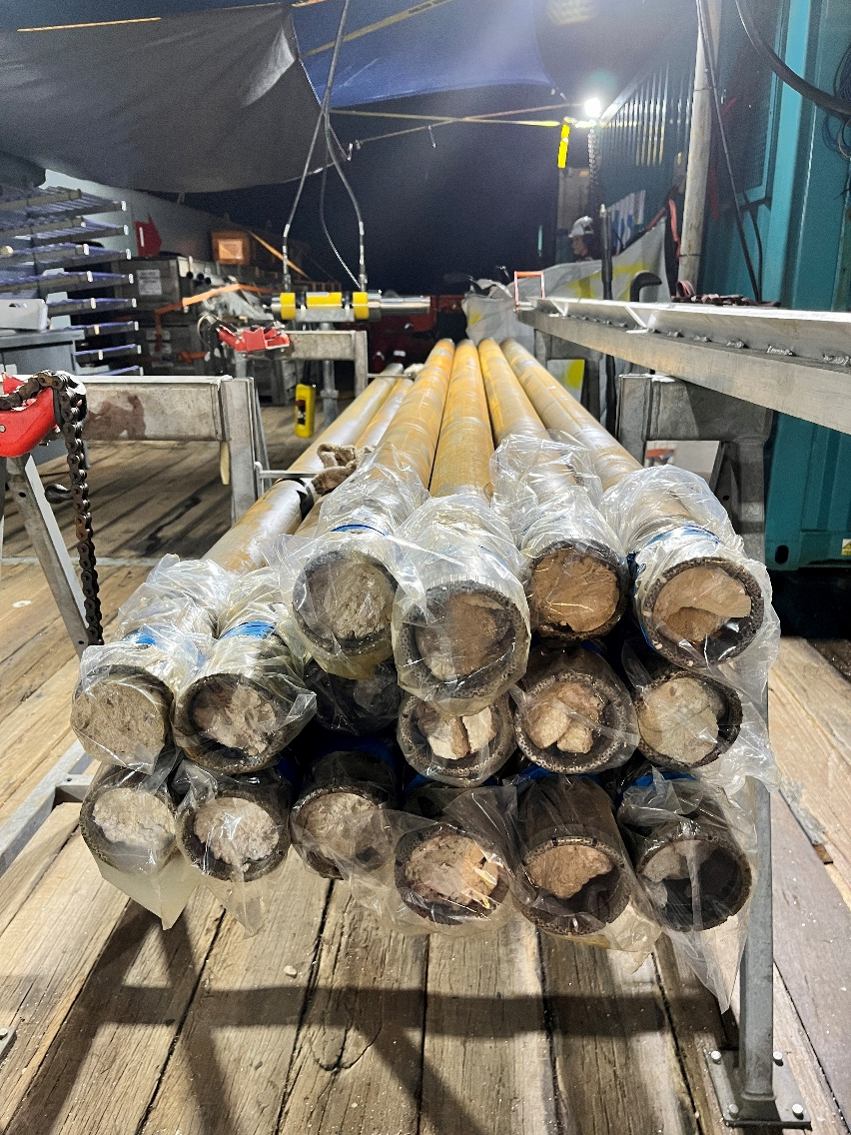
Figure 3: Core sections recovered from submerged fossil reefs offshore Hawai‘i by IODP Expedition 389 (Hawaiian Drowned Reefs). Photo credit: Marc Humblet/ ECORD/IODP.
My research also focuses on the lesser‑known mesophotic zone, where reefs grow at depths of roughly 30 to 150 meters. Light is dim but still sufficient for corals and algae to survive. These deeper reefs are important because they may hold clues to how coral reefs persisted during the Pleistocene despite major environmental changes. Using underwater robots that record images of the seafloor at mesophotic depths, it has been possible to document these ecosystems and learn about the corals and other organisms living there.
Another important component of my research is the study of coral skeletons using X-ray computed tomography (CT) scanning, a technique also used in medical imaging. CT scans allow the internal structure of coral skeletons to be visualized in three dimensions without damaging the samples. In fossil reefs, species identification can be difficult because corals may be broken or altered. By analyzing internal skeletal structures, it has been possible to develop new criteria for identifying fossil corals at the genus level, improving the accuracy of past reef reconstructions.
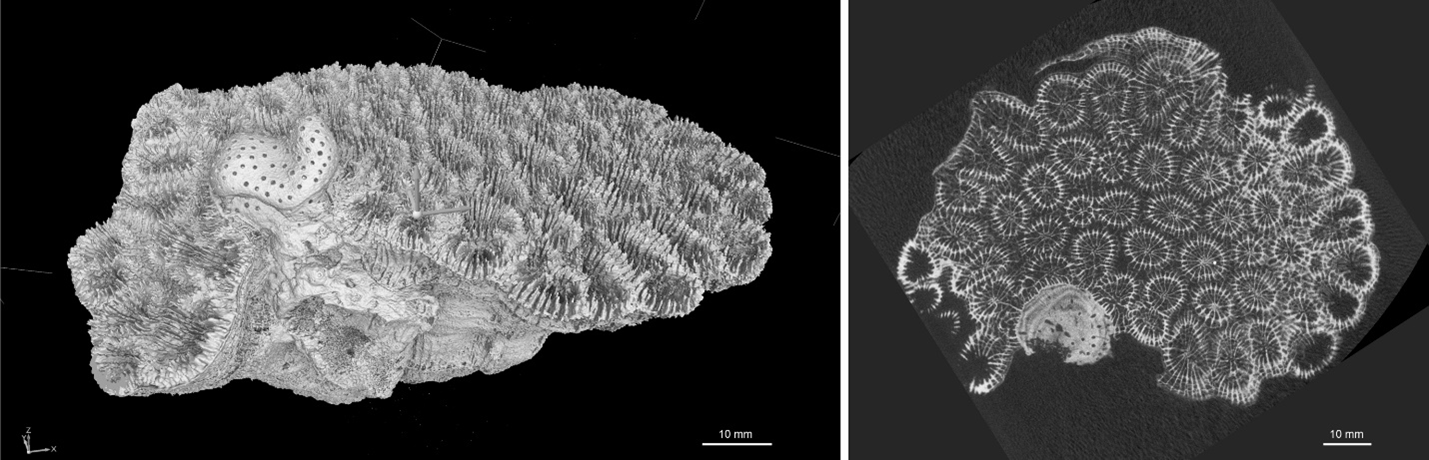
Figure 4: 3D image of a coral colony reconstructed from CT-scan data (left) and X-ray image of the internal structure of the same coral (right). Photo credit: Marc Humblet.
Although much of my research focuses on the distant past, the questions it addresses are highly relevant to the present. Coral reefs are among the most threatened ecosystems on Earth. Rising temperatures, ocean acidification, pollution, and coastal development all place stress on modern reefs. By understanding how reefs responded to environmental change in the past, it becomes possible to better predict their future and identify conditions that allow reefs to survive or recover. Geological research can complement ecological and conservation studies by providing a long‑term perspective essential for understanding reef resilience.
Throughout my career, I have collaborated with geologists, biologists, oceanographers, engineers, and climate scientists. These partnerships have made it possible to combine field observations, laboratory analyses, and advanced technologies to study reefs from multiple angles. Whether observing corals underwater, analyzing fossils, or interpreting CT‑scan images, the goal has always been the same: to uncover how reefs evolved through time and what their history can teach us about the future of our oceans.
Coral reefs are celebrated for their beauty, but their geological history reveals something equally remarkable: their ability to adapt, transform, and persist across vast stretches of time. By studying this history, I hope to contribute to a deeper appreciation of reefs—not only as vibrant ecosystems but also as dynamic geological structures shaped by the rhythms of the Earth. My research continues to explore these themes, driven by the belief that understanding the past is essential for protecting the reefs of tomorrow.
















〒464-8603 名古屋市千種区不老町
名古屋大学理学部E館 TEL:FAX:052-789-3033

©2014 Nagoya University Earth and Planetary Sciences